Why smearing fresh caulk over old sealant fails
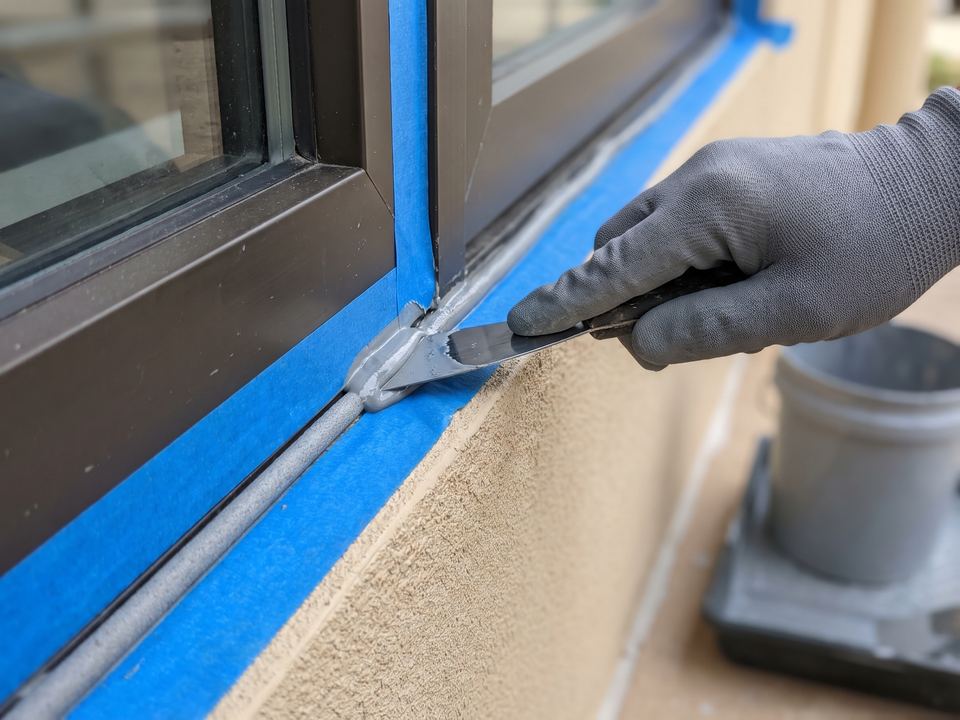
When a commercial storefront in Clifton Park or a 1990s EIFS house in Saratoga Springs starts leaking around window frames, the most common maintenance mistake we find is a thin skin of hardware-store caulk gunned straight over hardened, split sealant. That skin bridges no movement and has no depth to grip either side. Within one Northway winter, thermal contraction between vinyl or aluminum window frames and the adjacent wall cladding rips the thin bead right down the middle.
Above-grade facade waterproofing works only when every joint, flashing lap and barrier plane can move with 518 temperature swings without tearing loose. Our own crews treat sealants, sheet metal flashings, air-and-water barriers and elastomeric wall coatings as connected parts of the exterior envelope rather than a last-minute punch-list item.
Backer rod, bond breakers and low-modulus EIFS joints
Sealant joints around EIFS, cement stucco, masonry control joints and aluminum panels fail quickly if they stick to three surfaces at once. When sealant bonds to both opposing wall edges and the rigid bottom of the gap, seasonal expansion stretches the bead until it pulls the cladding face off. We cut out failed material cleanly, prep the joint return, insert properly sized closed-cell foam backer rod (or bond-breaker tape in shallow joints) and tool an hourglass profile so the sealant stretches freely across the middle.
On EIFS walls specifically, sealant should never be adhered to the textured acrylic finish coat. Textured finish can soften when damp and peel right off the base coat under joint tension. Our crews clean or grind joint returns back to sound, mesh-reinforced base coat, prime the substrate where the sealant manufacturer's technical data requires it, and tool low-modulus silicone or polyurethane facade sealants that stay flexible in sub-zero Lake George and Glens Falls cold.
Kick-out diverters, drip caps and through-wall transitions
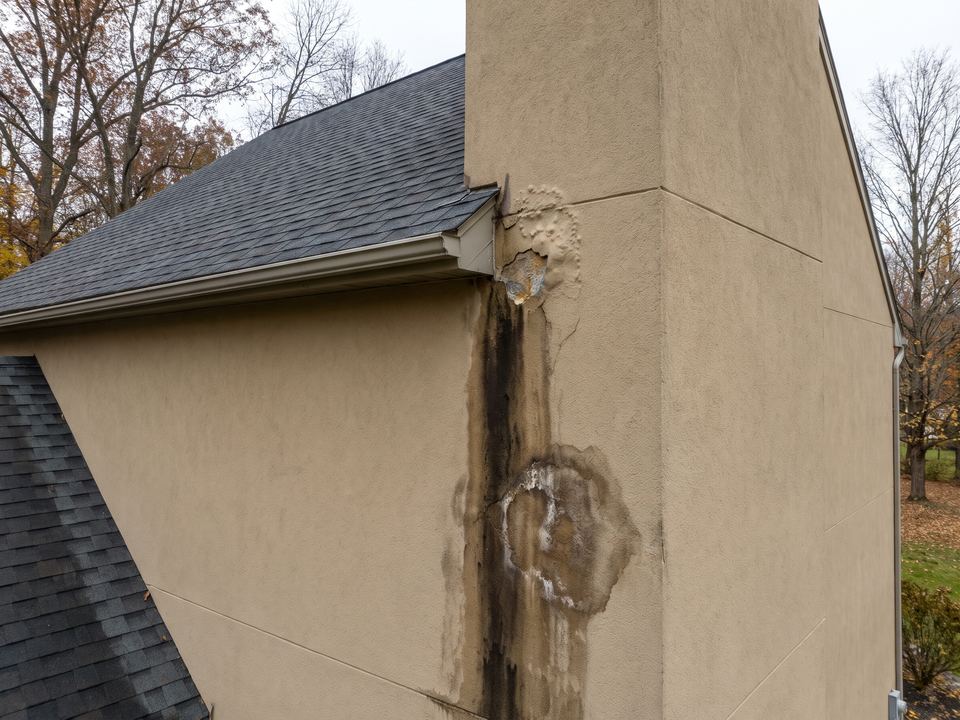
Flexible sealant alone cannot stop concentrated roof or ledge runoff. Wherever water collects on a horizontal shelf or roof valley, rigid sloped metal has to throw it clear of the wall plane:
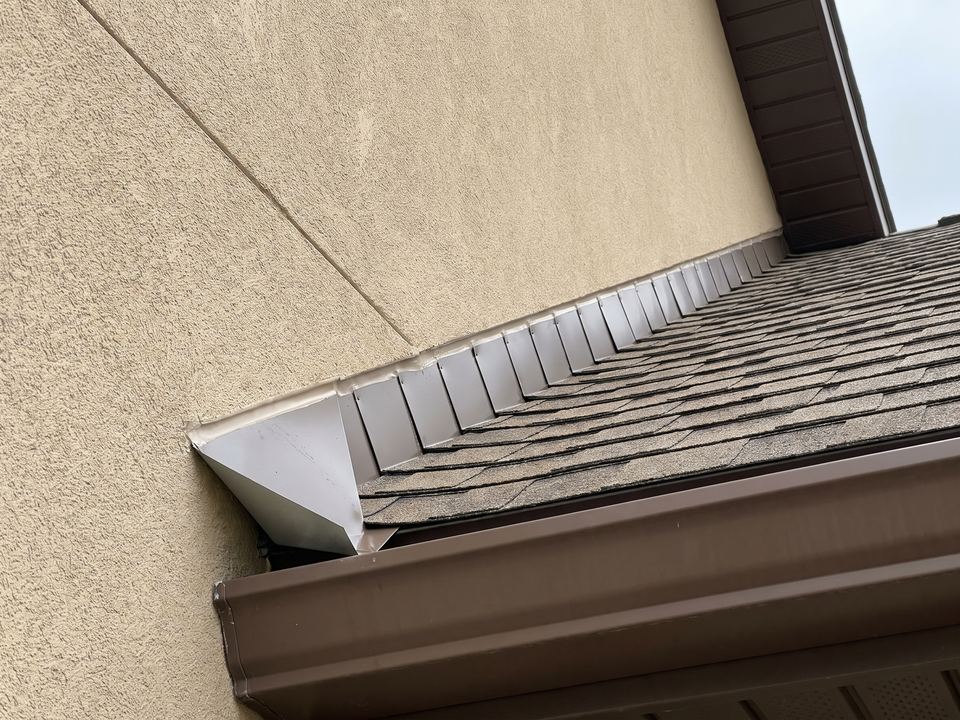
- Kick-out flashing at roof-to-wall intersections: Installed at the bottom of sloped roof step flashing so rain and melting ice dams turn into the gutter instead of channeling behind foam board or siding.
- Sloped drip caps over decorative bands: Flat horizontal EIFS projections hold sitting snow until water works through hairline cracks; in 2026, for example, we rebuilt a damaged residential EIFS band in Schenectady and capped it with a sloped metal drip flashing so runoff sheds cleanly off the face.
- Window head flashings and sill pans: Integrated into the weather barrier during EIFS repair and window-perimeter rebuilds to direct hidden condensation or wind-driven rain outward.
Air and water barriers plus vapor-permeable wall coatings
Behind every modern re-clad or new drainage EIFS project—such as the new EIFS envelope we completed on a steel-framed house in the Catskills in fall 2025—a continuous air and water barrier over the sheathing serves as the true inner drainage plane. We apply fluid-applied membranes, transition tapes and rough-opening flashings before insulation or panel sub-framing ever goes up. On existing weathered facades in Troy, Amsterdam, Malta and Ballston Spa that are structurally sound but crazed with fine surface cracks, we clean the wall and apply breathable elastomeric coatings that shed wind-driven rain while letting interior water vapor escape. Wet coatings and certain primers require about 40 °F and rising with no freezing for 24 hours; text photos to (518) 888-7851 any time of year for a free estimate.